
Written by: Dariy Bek
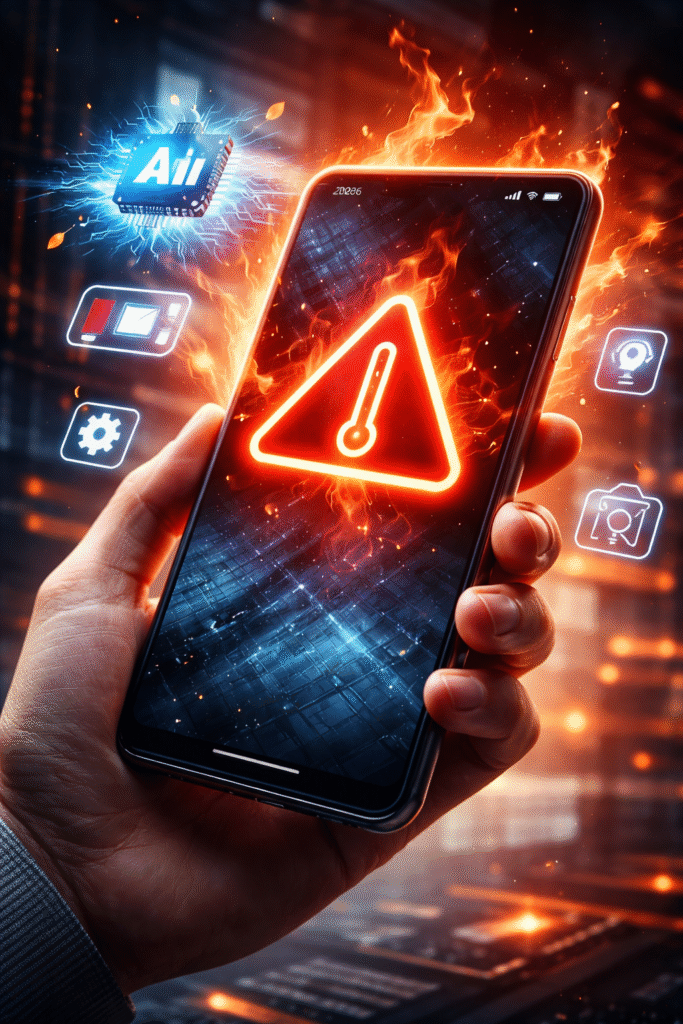
If your phone feels unusually hot while scrolling social media, using the camera, or even sitting idle, you’re not alone. In 2026, smartphone overheating has become one of the most common complaints among users—and the reason goes far beyond fast charging or aging batteries.
Modern smartphones now rely heavily on always-on artificial intelligence (AI) features. As experienced technicians at HotTech Repair, we’ve seen a sharp increase in heat-related failures tied directly to AI-driven processing and battery stress.
Because device overheating can pose safety risks such as battery swelling or fire hazards, this article falls under Your Money or Your Life (YMYL) guidelines. The information provided is educational and based on professional repair experience and reputable industry research.
Section 1: Why Smartphones Are Running Hotter in 2026
AI Is Always Working—Even When You Aren’t
Unlike phones from just a few years ago, today’s devices continuously run AI processes in the background. These include:
- On-device voice assistants
- Real-time photo and video enhancement
- Predictive text and language translation
- Smart battery optimization
- Facial recognition and biometric scanning
According to official Android developer documentation on on-device AI processing, many tasks are now handled locally instead of in the cloud to improve privacy and speed. This dramatically increases processor workload and heat generation.
Similarly, Apple’s machine learning framework documentation confirms that modern iPhones rely heavily on neural engines operating continuously in the background.
Scientific Research Confirms the Heat Problem
The Institute of Electrical and Electronics Engineers (IEEE) has published multiple studies showing that compact processors operating under sustained load generate heat faster than smartphones can dissipate it. Meanwhile, the National Renewable Energy Laboratory (NREL) confirms that elevated temperatures significantly shorten lithium-ion battery lifespan.
Bottom line: your phone isn’t malfunctioning—it’s being pushed harder than ever.
Section 2: The Direct Connection Between AI and Battery Degradation
How Heat Accelerates Battery Aging
Lithium-ion batteries degrade naturally over time, but heat dramatically speeds up this process. According to Battery University, sustained temperatures above 95°F (35°C) can reduce battery lifespan by up to 50%.
When AI features demand constant processing power, batteries discharge and recharge more aggressively, producing excess heat that damages internal chemical structures.
Always-On AI Features Are the Biggest Culprit
Features such as smart notifications, adaptive brightness, and background voice detection never fully shut off. Apple and Google both acknowledge that these features increase power consumption—even when the screen is off.
Fast Charging Makes the Problem Worse
Fast charging generates heat on its own. When combined with AI-heavy usage, the result is thermal stacking, where the phone never fully cools down. Apple openly states in its support documentation that devices may throttle performance or charging speed when internal temperatures rise too high.
Section 3: What We’re Seeing in Real Repair Shops
At HotTech Repair’s device repair center, technicians now routinely see overheating issues in phones less than two years old.
Common symptoms include:
- Rapid battery drain
- Phone shutting down due to heat
- Battery swelling that lifts the screen
- Devices becoming too hot to charge
You can view real examples of heat-related repairs in our repair gallery, which showcases actual devices damaged by thermal stress.
Section 4: Practical Steps to Reduce Phone Heat in 2026
Disclaimer: The following advice is for informational purposes only. If your phone shows signs of battery swelling, burning smells, or extreme heat, seek professional repair immediately.
1. Disable Unnecessary AI Features
Turn off features you don’t actively use, such as always-on voice assistants or background app intelligence.
2. Avoid Fast Charging When Possible
Standard charging generates significantly less heat and preserves battery health.
3. Remove Thick Cases During Charging
Insulated cases trap heat and prevent proper cooling.
4. Keep Your Software Updated
Manufacturers regularly release thermal optimization updates.
5. Get a Professional Battery Assessment
You can request an instant diagnostic and pricing estimate through HotTech Repair’s instant quote page.
Section 5: When Overheating Becomes a Safety Risk
The U.S. Consumer Product Safety Commission warns that damaged lithium-ion batteries can pose fire and burn risks if ignored. Warning signs include:
- Bulging or swollen batteries
- Cracking screens
- Burning odors
- Sudden shutdowns due to heat
If you’re located in Northern California, professional help is available at HotTech Repair’s Sacramento location.
FAQs: AI, Heat, and Battery Health
Is phone overheating normal in 2026?
Mild warmth is normal, but persistent overheating is not and usually indicates battery degradation or excessive background processing.
Can AI permanently damage my phone battery?
AI itself doesn’t damage batteries directly, but the heat it generates accelerates chemical wear.
Will replacing the battery fix overheating?
In many cases, yes—especially if the original battery has already degraded.
Should I stop using AI features completely?
No, but limiting unnecessary features can significantly reduce heat and extend battery life.
Conclusion: Smarter Phones Require Smarter Care
AI has transformed smartphones into incredibly powerful tools—but that power comes with heat, battery stress, and new risks. Understanding the relationship between AI features and battery degradation allows you to take proactive steps to protect your device, your data, and your safety.
For expert diagnostics, battery replacement, or professional advice, visit HotTech Repair or request help instantly through the instant quote form.
Final Disclaimer
This content is provided for informational purposes only and does not replace professional repair or safety advice. Lithium-ion batteries can be hazardous if mishandled. Always consult a certified technician for overheating or battery-related issues.